
How it was tested, and where the method is written down: How We Review.
A cigar has four parts and a price, and that is genuinely all you need to know to buy a good one. This is the framework both cigar reviews on this site use, and it is enough to tell a solid stick from a bad one.
1. The vitola is the shape and the size
Vitola is the size and shape of the cigar, and it decides how you smoke it. The Churchill is 7″ x 50 and it is the classic: a straight, measured burn that gives you about an hour. A Robusto is fatter and shorter, a Lonsdale is thinner and longer, a Torpedo has a tapered head. Both cigars reviewed here are Churchills, 7″ x 50, and both smoke the same way.
2. The wrapper is the flavor you taste first
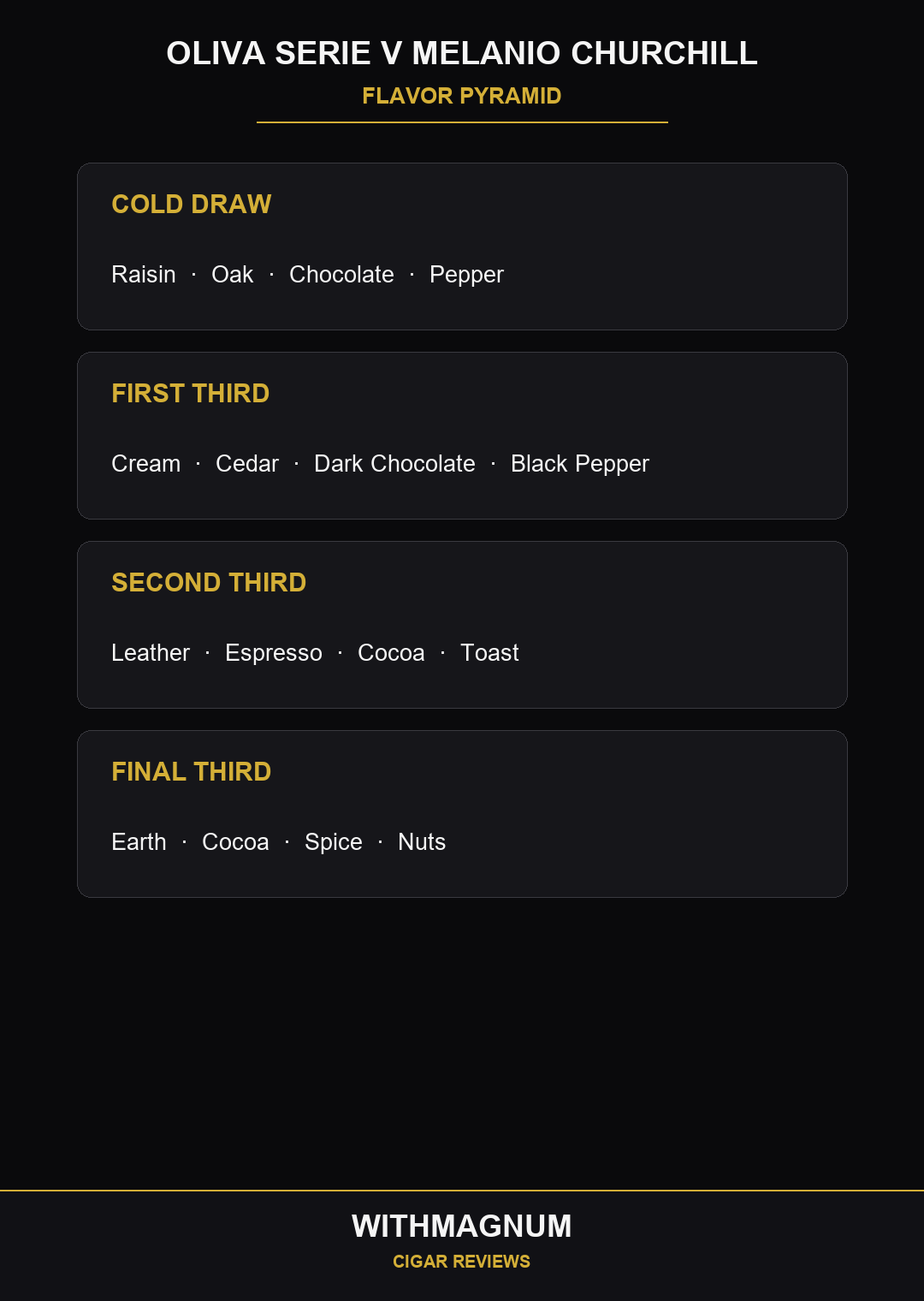
The wrapper is the outside leaf and it drives the first impression. Ecuadorian Sumatra is the classic choice and it is what Oliva Serie V Melanio uses: dark, oily, and it brings coffee and cedar through the cold draw. Indonesian Sumatra is what Romeo y Julieta 1875 uses, and it comes through drier and earthier. Wrapper and filler origin are often the same country, and that is not a coincidence. You will notice the wrapper before anything else, so buy the wrapper you already know you like.
3. Binder and filler are the body and the complexity
The binder holds it together and the filler is the bulk of the tobacco. This is where body and complexity come from, and it is the part that costs money. Nicaraguan tobacco, as in the Oliva, brings body, sweetness and finesse. Dominican filler, as in the Romeo y Julieta, is a solid, uncomplicated middle: medium body, real coffee and cocoa, nothing decorative. If you want an interesting cigar you will pay more and you will also have to pay attention.
4. Strength and body are not the same thing
Strength is how much nicotine hits you. Body is how much the smoke fills your mouth. You can have a high strength cigar with a light body, and a full bodied cigar that is mild. Both cigars here are scored on both: the Oliva is 4/5 strength and 4/5 body, the Romeo y Julieta is 3/5 and 3/5. A medium body 3/5 that burns evenly is worth more than a 5/5 that makes you dizzy halfway through.
5. The price is the last filter, not the first
The Oliva is MSRP $20.41 a stick, street $14 to $18.50. The Romeo y Julieta is about $8 to $10 a stick. They both scored 89/100, and they got there in different ways: the Oliva for body and finesse, the Romeo y Julieta for being a solid daily driver at a price that keeps it in the rotation. Price tells you where in the quality range you are shopping, but the cheapest cigar on the shelf is often a filler bomb, and the most expensive is often a middle that needed a filler to justify the box.
How to actually smoke it
Cut the cap, cold draw for about ten minutes, then light it and let it burn at an even pace. The Oliva reviews note the burn is slow and even and the ash is firm and will hold over an inch. The Romeo y Julieta review is honest about the fact that the burn wanders a little and the last inch turns bitter, so smoke it a bit past halfway. And both are Churchills at about an hour, so pick a time when you can sit with it, not between meetings.
Start with the Oliva Serie V Melanio Churchill review and the Romeo y Julieta 1875 Churchill review to see both side by side.